
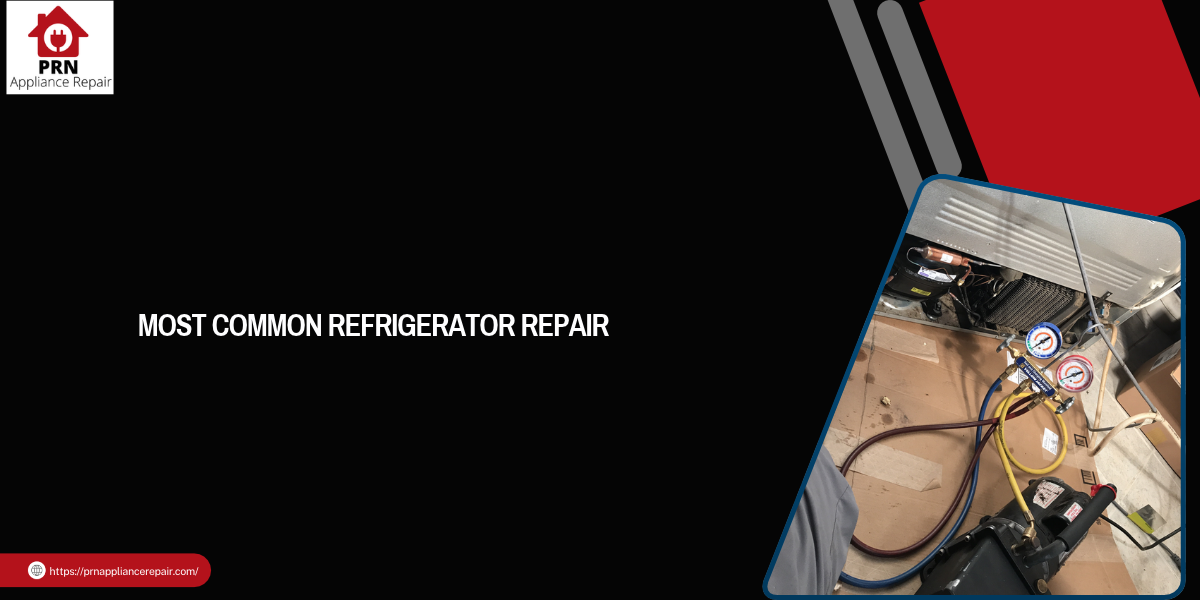
A refrigerator is the undisputed workhorse of the kitchen. It stays on 24/7, 365 days a year. When a complication requires refrigerator repair, people often panic because of the urgency of the matter. After all, you have to put the food somewhere else so it doesn’t go bad. Because it works all the time, the internals are bound to develop faults and start failing. The immediate fear most owners deal with is the cost of replacement. However, that is a possibility; it is not often the case.
Often you could just get your fridge repaired. Especially if you get professional service from a reliable company that cares, for example, PRN Appliance Repairs. Understanding the underlying causes of these repairs, paired with honest and trustworthy service, could save you thousands of dollars.
Let’s learn what the most common fridge repairs are:
Most common refrigerator repairs: What to look for
If you pay close attention to how your refrigerator behaves when it develops a fault, you can learn a lot. Below are the most common faults and repairs. We recommend hiring professional help for refrigerator repair in Raleigh, NC.
-
Refrigerator not cooling
The refrigerator starts warming up while the freezer remains cold. This usually happens because of a dirty condenser coil. A condenser coil’s job is to remove the heat from inside the cabinet. With time, dust and debris could easily coat the coil, thereby forcing the coil to work twice as hard to dissipate the heat. This can easily lead to cooling failure, but it is not a hard problem to fix.
-
Evaporator fan motor failure
The fan draws air across evaporator coils and circulates cold air throughout the fresh food and freezer compartments. If the fan motor freezes or the fan blades freeze, fresh cold air cannot circulate properly.
-
Faulty start relay or thermistor
The start relay supplies power to the compressor. If the relay fails, the compressor does not turn on. This results in no cooling at all. A faulty thermistor gives false temperature readings to the main boards, and this disrupts the cooling cycles. This one is not a simple refrigerator repair and requires expert help.
-
Clogged defrost drain
Melted frost drains through a small hole into a pan beneath the fridge during the automatic defrost cycle. This drain can easily get clogged by algae, crumbs, or ice. It causes the water to back up, and it starts flowing down the interior walls. The pools you notice on the floor are because of this issue.
-
Damaged water supply line
A damaged water supply line is a failure in refrigerators that come with a built-in ice maker. Since they rely on a plastic or braided copper water line, cracks, loose fittings, or pinhole leaks can flood the floor behind your fridge. It is an easy refrigerator repair.
-
Failing defrost component
A complete defrost system is complicated, as it consists of a defrost timer control board, defrost heater, and bimetal thermostat. If one of these parts goes bad, frost starts to build up until there is no airflow. Once airflow is blocked, cooling issues develop.
-
Defective temperature control thermostat
If the thermostat fails to read the internal temperature, it fails to signal the compressor that the fridge has reached the set temperature. The fridge keeps cooling, and you start seeing ice in the regular compartments alongside the freezer.
| Fault | Primary Repair | Difficulty |
| Fridge warm, freezer cold | Replace evaporator fan motor. | Moderate |
| Water pooling under drawers | Flushed blocked defrost drain. | Easy |
| Clicking noise, no cooling | Replace the compressor start relay. | Moderate |
| Ice sheet on freezer floor | Thaw and clear frozen drain trough. | Easy |
| Loud chirping from the freezer | Replace the noisy evaporator fan. | Moderate |
| Water leak behind unit | Replace damaged water inlet line. | Easy |
| Exterior sides hot to the touch | Vacuum dirty condenser coils. | Easy |
| Small or hollow ice cubes | Replace the clogged water filter. | Easy |
| Ice maker motor won’t dump ice | Replace the ice maker. assembly | Moderate |
| Door seal torn or loose | Replace magnetic door gasket. | Moderate |
Preventative Maintenance
- Clean coils every 6 to 12 months located at the back or bottom of the unit.
- Inspect and clean door gaskets by wiping them down with soapy water to remove sticky residue.
- Change water filters regularly every 6 months to maintain water pressure and protect valves.
- Maintain proper clearance by leaving a few inches between the back of the fridge and the walls. Allows for better airflow.
Conclusion
Encountering a broken refrigerator could be frustrating. While some problems have an easy fix, others require refrigerator repair services. Getting your fridge repaired is better than having to replace it. Rather than spending thousands of dollars on a new one, have your existing one inspected. Usually, the problem has a quick fix, and you don’t have to throw your machine out. By catching these early signs, you can address the issue early. Call a reputable refrigerator repair in Durham, NC, like PRN Appliance Repairs, for the best results.
Frequently Asked Questions
Why is my fridge warm but the freezer cold?
It is probably a failed evaporator fan or frost blocking air vents.
What causes water to pool under the crisper drawers?
When the defrost drain hole is clogged, water pools under the crisper drawers.
How often should I clean my fridge coils?
You should clean your fridge coils every 6 to 12 months.
Why is my ice maker producing tiny or hollow ice cubes?
A clogged water filter is probably restricting water flow for better ice production.
How long do refrigerators typically last?
Refrigerators can last you between 10 and 15 years if they are properly maintained.